
Uncategorized
cryptocurrency market
Cryptocurrency market
Cryptocurrency is digital currency that doesn’t require a central bank or financial institution to verify transactions. Instead, this virtual currency is verified and recorded with blockchain technology, creating an unchangeable ledger that tracks trades and the purchase of digital assets https://magazroxik.info/. Although the first cryptocurrency emerged in 1990, the buzz surrounding cryptocurrency exchange has exploded in recent years. Despite the opportunities, market volatility reminds us to consider the risk involved in cryptocurrency trading. Whether you’re interested in virtual currency for your career or to invest, understanding how cryptocurrency works is an essential first step. Learn more about cryptocurrency exchange, the crypto market, environmental impacts, and popular cryptocurrencies in the following article.
Store and/or access information on a device. Use limited data to select advertising. Create profiles for personalised advertising. Use profiles to select personalised advertising. Create profiles to personalise content. Use profiles to select personalised content. Measure advertising performance. Measure content performance. Understand audiences through statistics or combinations of data from different sources. Develop and improve services. Use limited data to select content. List of Partners (vendors)
Taking time to watch the performance of the cryptocurrency you’re considering before investing can help increase your chances of success. Doing your homework now can help minimize risk. On the other hand, jumping in too quickly because you’re afraid you’ll miss out can lead to significant losses. Regardless of the strategy, it is wise to consider investing only what you are willing to lose.
Top cryptocurrency
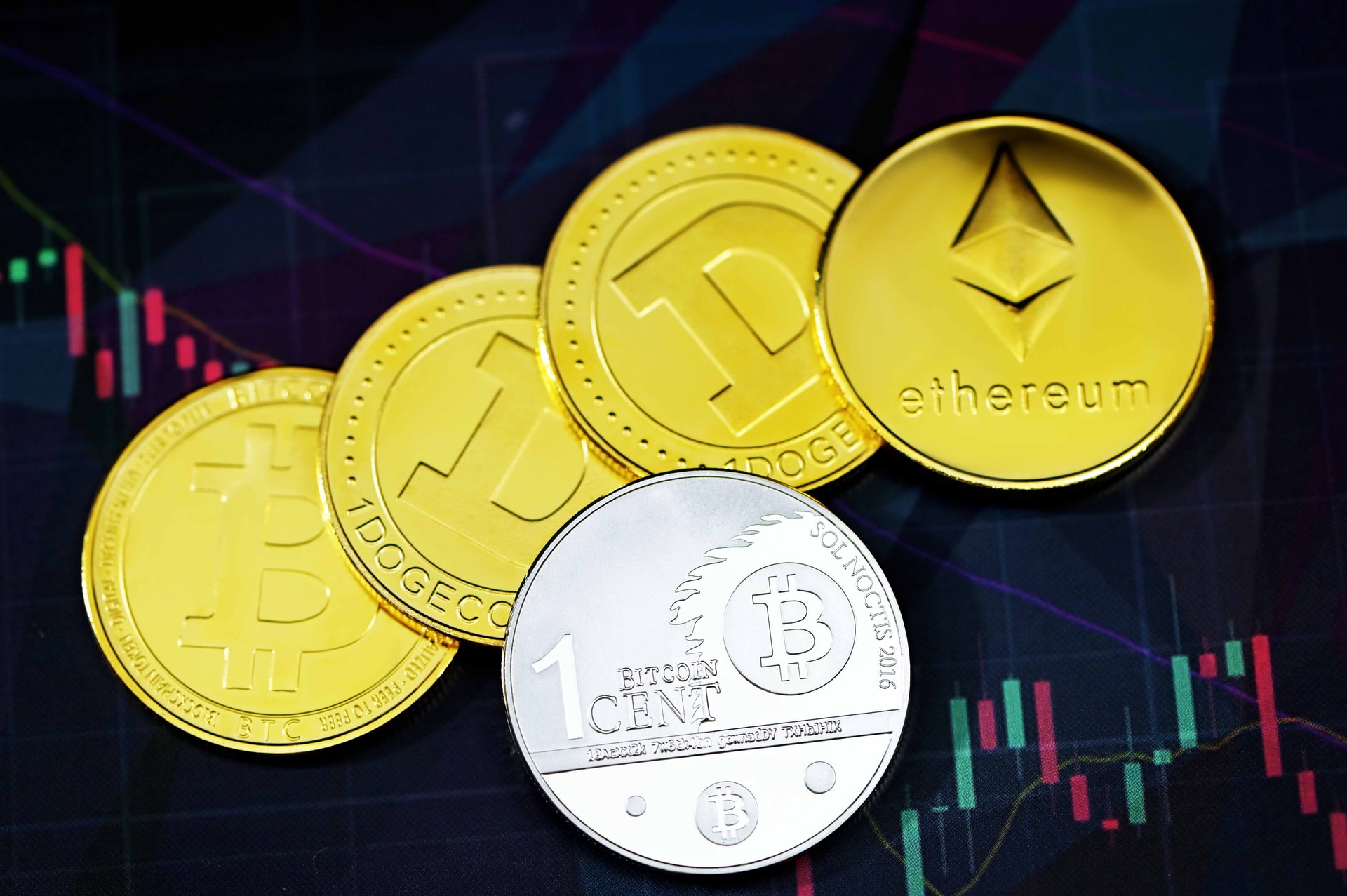
Dogecoin was famously started as a joke in 2013 but rapidly evolved into a prominent cryptocurrency thanks to a dedicated community and creative memes. Unlike many other cryptos, there is no limit on the number of Dogecoins that can be created, which leaves the currency susceptible to devaluation as supply increases.
As with all currencies, the value depends on supply and demand. Bitcoin has value because there are high demand and low supply. Cryptocurrencies such as Bitcoin are available in limited amounts in the same way as precious metals such as Gold.
These crypto coins have their own blockchains which use proof of work mining or proof of stake in some form. They are listed with the largest coin by market capitalization first and then in descending order. To reorder the list, just click on one of the column headers, for example, 7d, and the list will be reordered to show the highest or lowest coins first.
From bitcoin and Ethereum to Dogecoin and Tether, there are thousands of different cryptocurrencies, which can make it overwhelming when you’re first getting started in the world of crypto. To help you get your bearings, these are the top 10 cryptocurrencies to invest in based on their market capitalization or the total value of all the coins currently in circulation.
Unlike some other forms of cryptocurrency, Tether (USDT) is a stablecoin, meaning it’s backed by fiat currencies like U.S. dollars and the Euro and hypothetically keeps a value equal to one of those denominations. In theory, this means Tether’s value is supposed to be more consistent than other cryptocurrencies, and it’s favored by investors who are wary of the extreme volatility of other coins.
Cryptocurrencies are various forms of digital money that are usually based on blockchain technology. Blockchain technology allows most cryptocurrencies to exist as “trustless” forms of transactions. This means there is no centralized authority overseeing the transactions on a cryptocurrency’s blockchain.
Pi network cryptocurrency
Pi’s mining rewards are distributed based on an issuance formula that follows a declining exponential model defined in the Pi whitepaper. Users can increase the amount of mining rewards they receive based on their individual contributions to the network, like Security Circles, using utility-based Pi apps, running Nodes, etc. For each month, the amount of Pi to be distributed as mobile balance is capped and determined by the model, regardless of how many people or how many types of mining rewards there are during the month. The capping is achieved by the design of a system-wide base mining rate, and each type of mining rewards to each individual are just a multiplier of this base mining rate. As the monthly supplies always diminish, the base mining rate generally decreases over time. Fewer Pi may also be issued because the real Pi issuance on the blockchain depends on Pioneers passing KYC and completing all steps required for migration to the Mainnet. Despite all efforts to facilitate and remind Pioneers to complete those required steps, there are always dropoffs along the way, resulting in less than all outstanding mobile balances to be issued on the blockchain. Because of this mechanism, the community issued amount (Migrated Mining Rewards) on the blockchain will likely be closer and closer to a line lower than the 65 billion. This is thus the reason for the variable Effective Total Supply which incorporates this effect. Effective Total Supply results from all Migrated Mining Rewards divided by 65%, as opposed to the Maximum Supply of 100 billion.
The network is inspired by the Stellar Consensus Protocol (SCP) and operates without proof-of-work (PoW). Users, known as Pioneers, form security circles to verify transactions and contribute to network security.
Pi Network has to navigate a tricky world of global rules about whether it’s a security, meeting anti-money laundering and KYC rules (which it’s working on), protecting user data (like GDPR), and how it’s taxed. There isn’t much public info about thorough, independent security checks on Pi Network’s main system, which still makes some experts uneasy.
Unlike traditional cryptocurrencies, such as Bitcoin (BTC), which require powerful computers and a lot of energy to mine coins, Pi can be mined effortlessly with just a tap. Members can earn new Pi coins by simply tapping a “Lightning” button in the Pi Network mobile app once every 24 hours without keeping the app open.
Users earn PI through the Pi Network mobile application by participating in the network daily. The currency is intended for peer-to-peer transactions, payments, and as a medium of exchange within dApps built on the network.